The "Post-Cookie" Neurological Profile: How to Trade Tracking for Trust
Third-party cookies are dying. Learn how to use neuromarketing principles and choice architecture to build "Psychological Preference Centers" that capture zero-party data and true consumer intent.
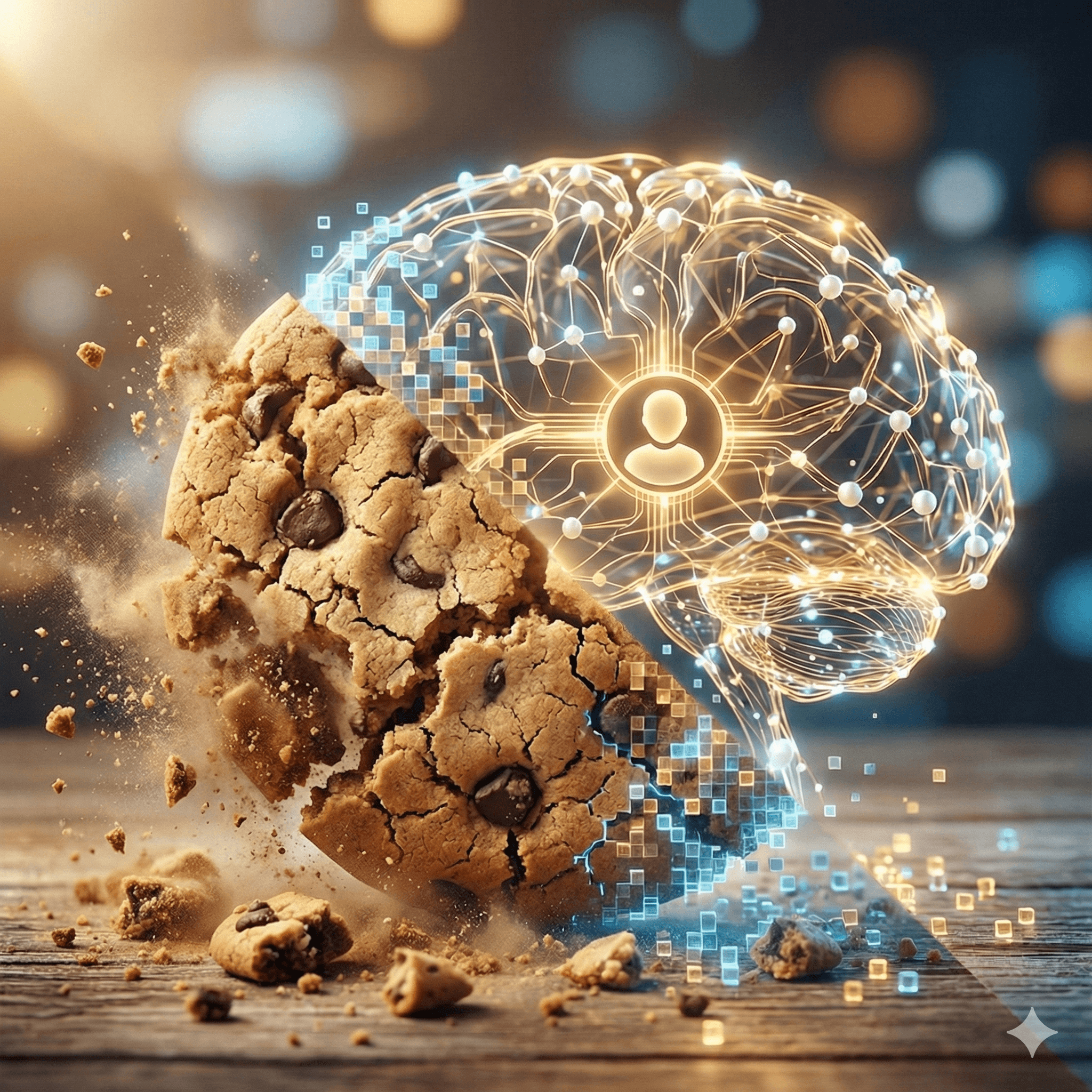
The Hook
The third-party cookie is crumbling, leaving marketers with a massive blind spot. You can no longer secretly track behavior; you must now explicitly ask for it. But traditional surveys are plagued by bias and "social desirability" filters. The solution? Psychological Preference Centers—interactive, neuro-optimized experiences that invite users to reveal their true selves in exchange for genuine value.
The Epistemological Crisis (and Opportunity)
For decades, we relied on the "rational consumer" model, assuming people could explain their own behavior. We tracked clicks and assumed intent.
But neuroscience has dismantled this. We now know that the vast majority of decision-making occurs below the threshold of conscious awareness.
As we lose the ability to track users across the web, we are forced to rely on Zero-Party Data (data a customer intentionally shares). The danger is that if we just ask "What do you want?" via a standard form, we get "post-hoc rationalizations"—logical fabrications for emotional choices.
To get the truth, we must design the "ask" using the principles of the human brain.
Building "Psychological Preference Centers"
A Psychological Preference Center isn't a "Update Your Email Preferences" page. It is an interactive experience—a quiz, a game, or a visual sorter—designed to bypass the conscious filter and tap into implicit drivers.
The Principle of Reciprocity
The brain is wired for reciprocity. If you want valuable data (psychological traits), you must offer immediate value.
Don't ask for data; offer a diagnosis.
- Bad: "Tell us your skin type for 10% off."
- Neuro-Optimized: "Take this visual assessment to discover your unique Skin Profile."
By framing the interaction as a service rather than a transaction, you lower the cognitive "cost" of entry and align with the brain’s reward circuitry.
Leveraging Choice Architecture
How you present choices changes the decision. This is "Choice Architecture".
Instead of text-based dropdowns, use visual metaphors.
- Text: "I prefer safe investments."
- Visual: Show two images—a secure vault vs. a fast race car—and ask users to click impulsively.
PayPal found that "speed" messaging activated reward centers more than "security" messaging, even though users claimed security was their priority. Visual quizzes can detect these split-second preferences that text surveys miss.
From Tracking Behavior to Inviting Disclosure
The shift from third-party tracking to zero-party disclosure requires a fundamental change in mindset.
| Metric | Third-Party Tracking (The Old Way) | Neuro-Optimized Zero-Party Data (The New Way) |
|---|---|---|
| Data Source | Inferred from clicks and history | Explicitly shared by the user |
| Accuracy | Low (prone to false assumptions) | High (if the "ask" bypasses bias) |
| User Feeling | Spied upon / "Creepy" | Understood / "Heard" |
| Psychological Depth | Behavioral (What they did) | Motivational (Why they did it) |
| Method | Surveillance pixels | Gamified "Implicit Association" tasks |
Profiling Without Prying: The Big Five
You can use simple "This or That" image quizzes to map users to the Big Five personality traits (Openness, Conscientiousness, Extraversion, Agreeableness, Neuroticism) without them feeling analyzed.
- Openness: Do they prefer abstract, novel product designs or traditional, familiar ones?
- Conscientiousness: Do they click on "Plan Ahead" bundles or "Last Minute" deals?
The "Implicit" Trick
Borrow from the Implicit Association Test (IAT). Speed matters. Ask users to sort items or concepts quickly.
- The theory is that strong memory associations are processed faster.
- If a user associates your brand with "Trust" instantly, that is a true neural link. If they hesitate, it’s a calculated response.
By measuring reaction time in your interactive quizzes, you can weight the certainty of the data point.
Conclusion
The death of the cookie isn't the end of personalization; it's the beginning of Predictive Empathy.
By moving away from covert tracking and toward transparent, scientifically designed "preference centers," we do more than just harvest data. We build trust. We stop treating consumers as targets to be stalked and start treating them as humans to be understood.